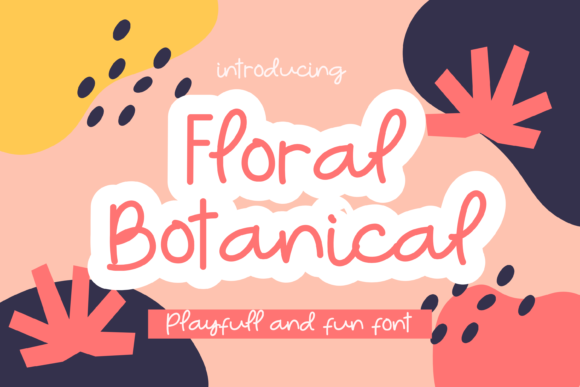
Floral Botanical: A Cheerful Handwritten Font for Cozy Branding Projects
Floral Botanical in Logo Design: Friendly and Approachable Typography
When I first opened a new brand board for a local artisan bakery, I wanted a logo that felt warm and personal. Floral Botanical stood out immediately as a candidate. Its soft, flowing strokes and gentle curves gave it a handwritten charm that screamed “handmade with care.” I tested it on a few logo drafts and found that it brought a sense of sincerity and approachability. It’s not a bold or dramatic font, but rather one that whispers warmth and familiarity — perfect for brands that want to feel like a trusted neighbor.
Using Floral Botanical for Packaging Design: Natural Touch for Product Labels
I placed Floral Botanical on a packaging mockup for a small batch honey brand. The font’s cozy, organic feel complemented the earthy tones and minimalist layout beautifully. It worked especially well for product names and taglines, where a bit of personality is needed without overpowering the design. That said, I wouldn’t recommend it for long ingredient lists or small print — it’s best reserved for short, impactful phrases. If you're designing for a boutique brand or a natural product line, this script handwritten font is a great fit.
Floral Botanical for Social Media Graphics and Website Headers
Next, I tried Floral Botanical in a website header and Instagram post design for a wellness blog. The font’s cheerful energy made headlines pop without feeling forced. On screen, it rendered cleanly and maintained its character even at moderate sizes. For social media headers, quote graphics, or blog titles, it adds a personal touch that pairs well with modern sans serif fonts for contrast. Just be cautious about using it in body copy or anywhere readability is key — it’s definitely more of a supporting typeface than a workhorse font.
Font Pairing Tips: Combining Floral Botanical with Other Typefaces
To balance its soft, handwritten style, I paired Floral Botanical with a clean sans serif like Montserrat or Lato. This created a nice visual hierarchy — the script font handled the emotional tone, while the sans serif grounded the design with clarity and professionalism. For more vintage or rustic branding, a serif font like Playfair Display could also work, though I found that Floral Botanical shines best when contrasted with something modern. If you're designing for a creative studio or handmade shop, this kind of pairing can elevate the overall aesthetic without losing authenticity.
Testing Floral Botanical in Print: Business Cards and Brand Boards
I also tested Floral Botanical on a set of business cards for a local florist. At print sizes around 14–18pt, it held up beautifully — the ligatures and natural flow of the letters gave the design a handcrafted look that felt intentional and polished. On brand boards, it helped establish a warm, cohesive identity that felt distinct from more generic script fonts. Still, I’d advise designers to test at various sizes and in different contexts before finalizing — especially if the font will be used across both digital and physical assets.
When Floral Botanical Might Not Be the Right Choice
While I found Floral Botanical to be a joy to work with in many branding contexts, it’s not a one-size-fits-all font. It’s best suited for projects that call for a friendly and natural touch — think boutique branding, wedding stationery, wellness brands, or artisanal packaging. It’s not ideal for formal corporate use, technical documentation, or long-form editorial design. If your project requires high readability at small sizes or a more structured, authoritative tone, you may want to explore other script fonts or serif typefaces instead.
What to Check Before Using Floral Botanical in Client Work
Before using Floral Botanical in any client deliverables — especially for packaging, merchandise, or web use — I always double-check the font’s licensing terms. Some fonts are only licensed for personal use or limited commercial applications. Since this is a script handwritten font often used in branding and commercial design assets, it’s crucial to ensure you have the right permissions for the intended use. Also, verify what file formats are included (OTF, TTF, WOFF) and whether webfont versions are available for website use.